
The Chedi, Muscat
20-26 December 2016
For a very long time, since the 1990s when Conde Nast Traveller was my travel guide, I have been keen to visit the Chedi, Muscat. My opportunity arose when British Airways started flying direct to Muscat in the winter 16/17 schedule, as it presented me with the opportunity to use my annual concessionary ticket, as a former manager with BA. And I had come to realise that I have always enjoyed staying at hotels in the Leading Hotels of the World (LHW) portfolio – the very best experience of which, the Datai in Langkawi, was just six months earlier. I chose to arrive at the hotel on 20th December and stay for 6 nights. I booked a Deluxe Club Room, because I like Club room benefits, at OMR356/night, which was about £725 at the time. But I noticed that from Christmas Eve the price almost doubled. So I actually booked a lesser room, a Serai Sea View Room for my last two nights, which had also doubled in price to the same sort of rate I was paying for the first four nights. For me, this was a lot of money, the most I have ever paid in a hotel, twice what I paid at the Datai, but that was OK, as the Chedi was on my bucket list: so I arrived with very high expectations.
The Chedi Club rooms grant complimentary airport transfers, so we were met after baggage reclaim by a driver in a brilliant white dish dash, who guided us to a gleaming rust coloured BMW M5 for the 15 or so minute drive to the Chedi. Unlike my transfers at some other hotels, there were no special welcoming extras in the car, such as cold towels, newspapers or drinking water. But hey, it saved on the taxi fare, and was a much better car!
We arrived at the hotel around 8am. There’s a nice long driveway from the main road to the property, banked on both sides by green succulents, so from the car level you only see these green banks. But if you’re walking down the driveway you notice that beyond the green banking there’s a lot of waste/empty land. So I think it would be a nicer approach if there were maybe palm trees lining the approach, or something to make it more grand and impressive.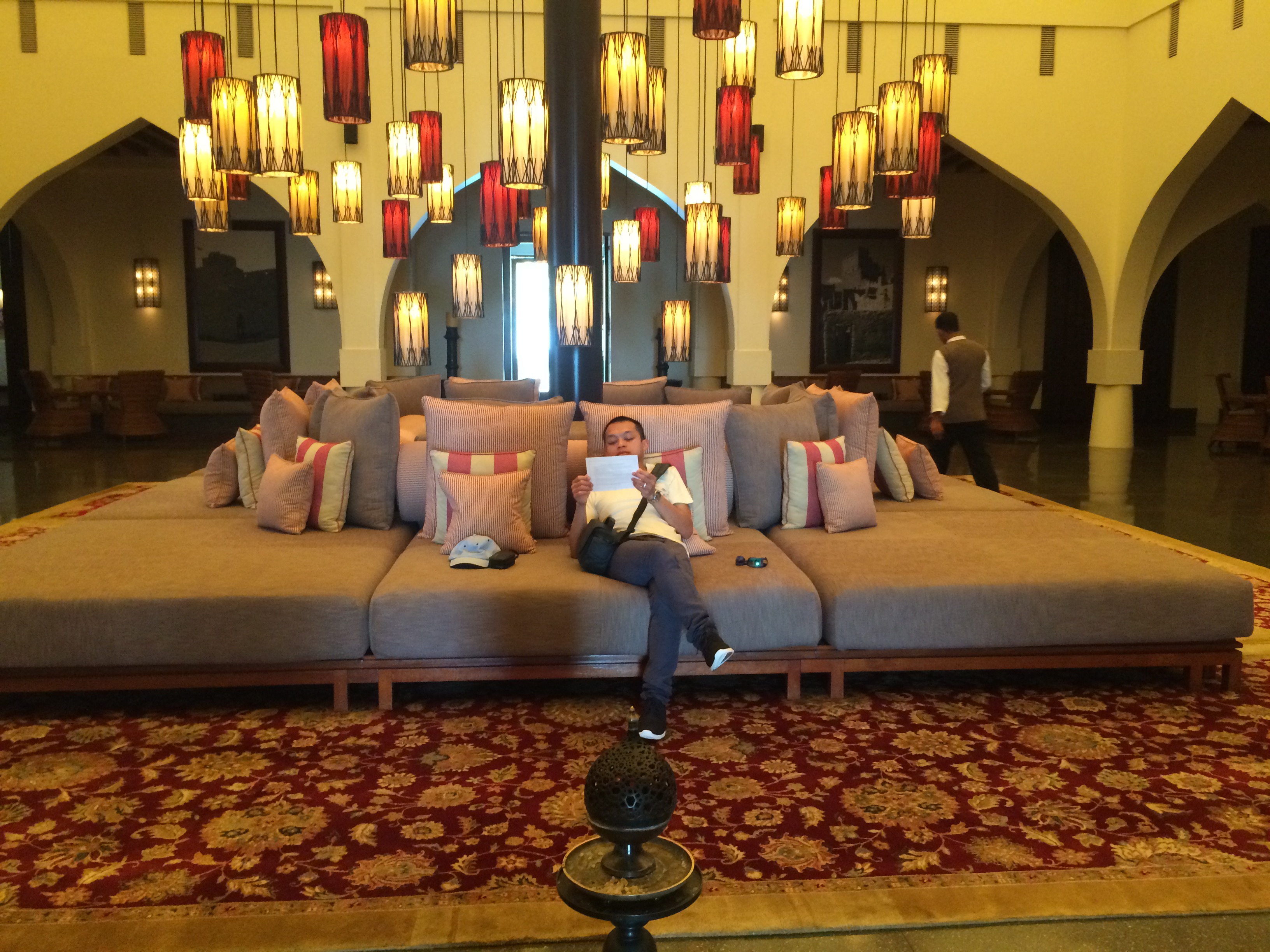
We were warmly greeted by the staff around the entrance, and shown to seats in the main foyer area of the hotel which is reminiscent of a grand beduin tent. There we were given a cold wet towel and a soft drink. I had expected to change clothes and retire to the pool area while we waited for our room to be readied, but the delightful Krishna who performed our check in duties told us we were being upgraded into one of their four Deluxe Club Terrace Rooms, which was ready for us now, and that we would be able to stay there for the whole of our stay! I admit that I had secretly hoped we’d be granted Club room status throughout our stay, and not have to move to the less expensive room for our last two nights. But it was not a given, so well done to the Chedi for offering me this great privilege!
The room was on the 2nd floor and was a perfect size; enough space to feel airy, comfortable and light, without being too big and soulless. Their website says it was 39m squared. The doorway opened to the bathroom area; a stone washbasin on each side, a large rain shower room on one side and a toilet with bidet on the other. Straight away I noticed, and was impressed by, the Aqua di Parma toiletries. A large wardrobe with a few small drawers, on each side opposite the washbasins separated the space from the bedroom, which featured an oversize bed across from a sitting area, with the mini bar on one side and a Nespresso machine on the other, a writing desk plus a large TV on the wall. All of the wood, including the floor, was dark and sexy, and looked great against white walls. Each of the floor to ceiling windows had lovely dark wood venetian blinds which were covered by a further roll down blind during evening turn down service, to block out as much light as possible. Patio doors opened onto a spacious (13m sq) balcony, with a chair and a lounger, which looked down upon one of the hotel’s beautifully designed water garden areas, crisply manicured hedges, lawns and beyond them the water
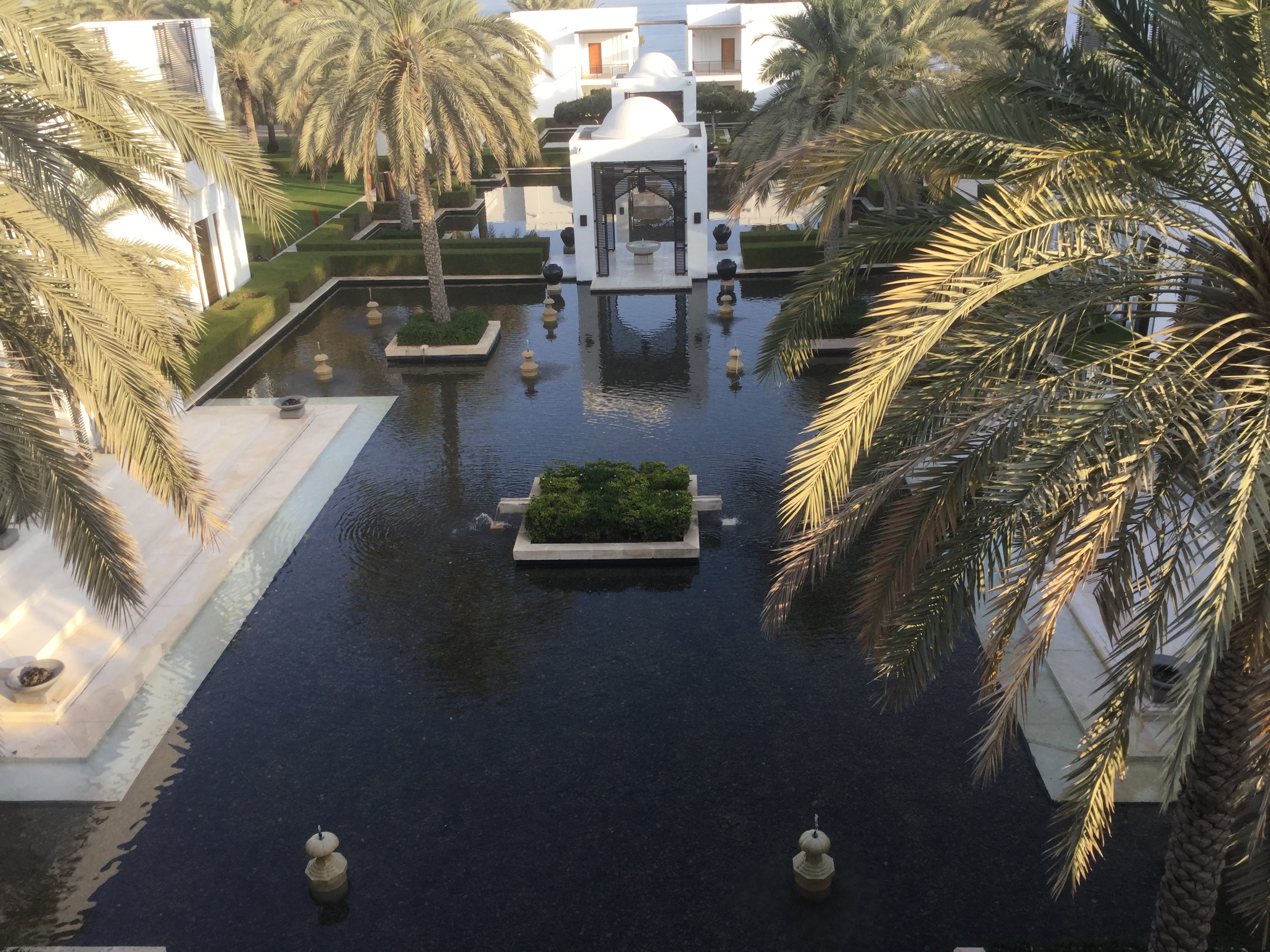
s of the Gulf of Oman. The balcony provided very charming views through our stay, of these grounds, of the birdlife bathing in the water gardens and then drying off in the palm trees, and of the aircraft approaching Muscat airport from right to left, just offshore. Aircraft noise was not a problem, just a distraction. Rather than use aircon, we slept with our balcony doors open every night and awoke to beautifully fresh air.
After we unpacked and changed we went out to explore the hotel and its grounds. To be frank it wasn’t easy, as there are minimal signs around. To access the Club Lounge you have to go outside, then back in through a different door, which seemed odd.
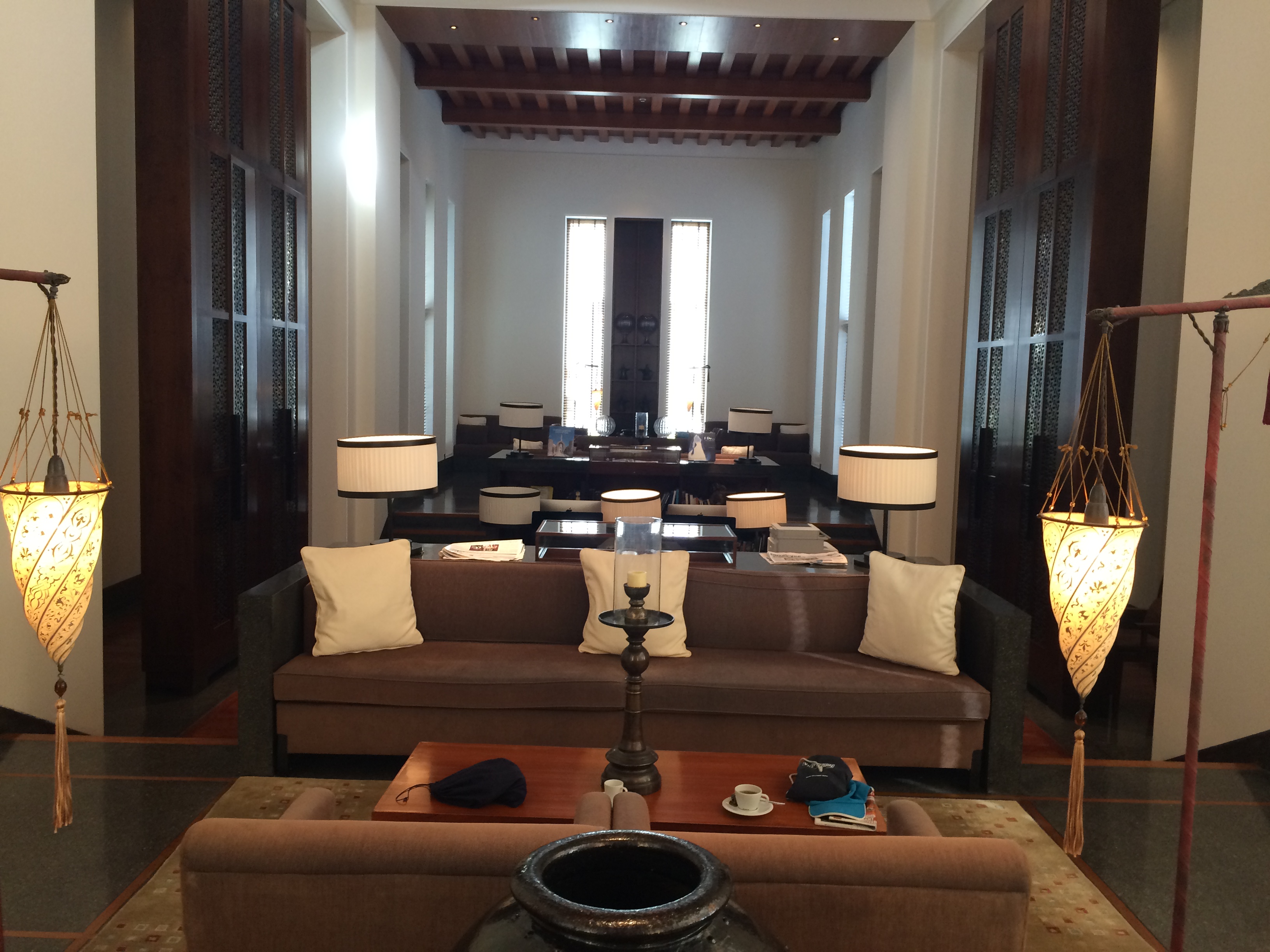
The Club Lounge is a charming room with a super-high ceiling, including a silver painted dome in the centre. It has various types of seating scattered about, some tables with MACs available to use, and a collection of interesting books covering an eclectic subject range from Oman through Islam, to picture books of great golf courses. Bedrooms with Club access can grab a tea or coffee there anytime, and from 3pm you can help yourself to afternoon tea, served with a daily changing selection of small rolls, pastries and chocolates. And after 6pm they serve cocktails and daily changing canapés, which regularly included sushi. As well as sitting in the lounge, one could also sit on an outside terrace with views to the tennis courts. Surprisingly Mr A and I, plus one man on his own, were the only regulars for the Club treats.
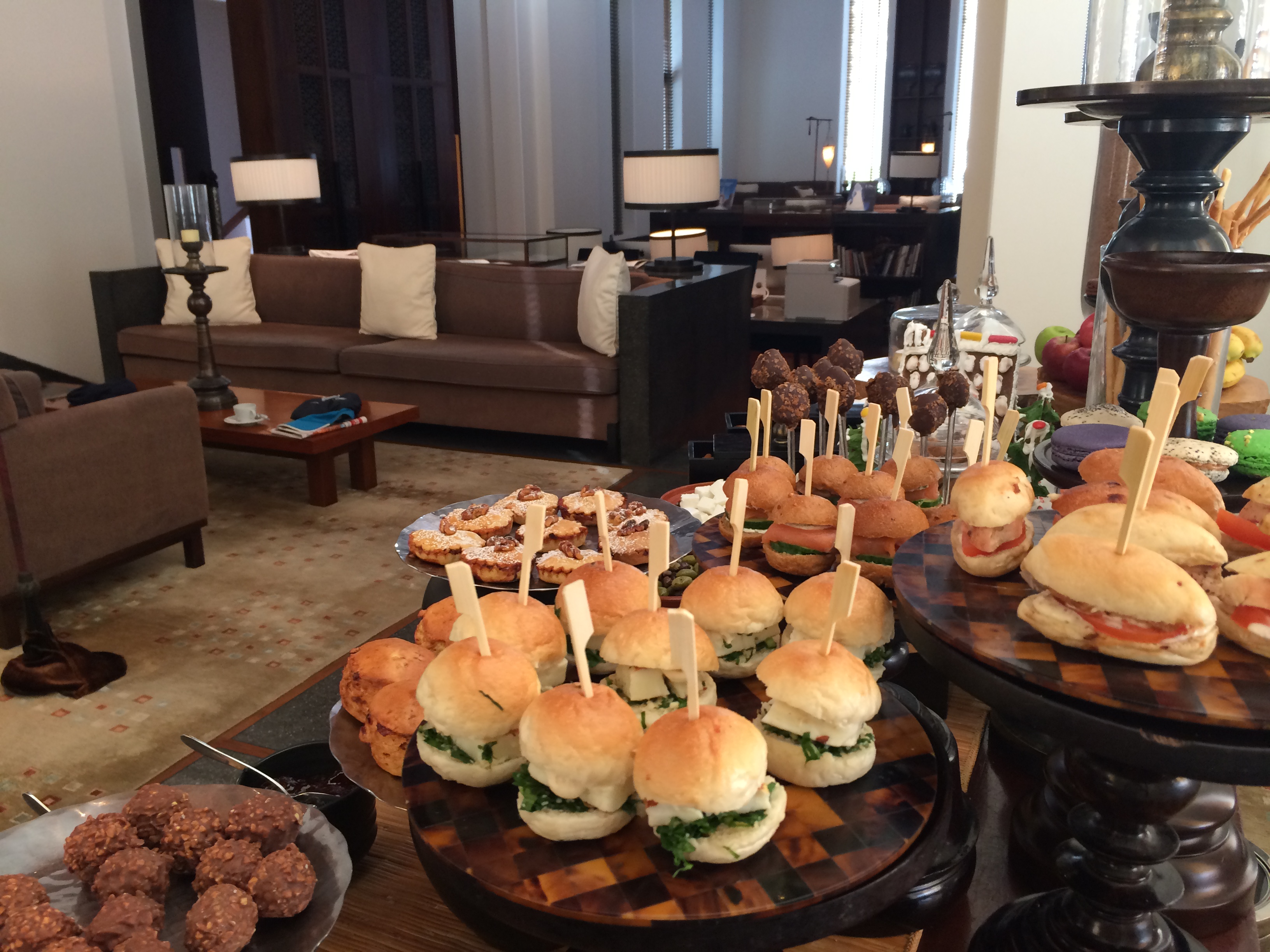
A few others popped in from one day to the next, but it was generally a relaxing space that was not at all busy or crowded. The ambience was, however, occasionally upset by (american) ladies nipping in to grab a treat in bare feet, wearing their room bath robes. In my own small hotel/guest house in England I do encourage guests to walk about in their bath robes, to help them feel that they’re staying at a friend’s house. But it just didn’t seem appropriate in the context of the Chedi, or an Islamic country, and I do wish the hotel would try to manage a dress code, just as it does in its restaurants.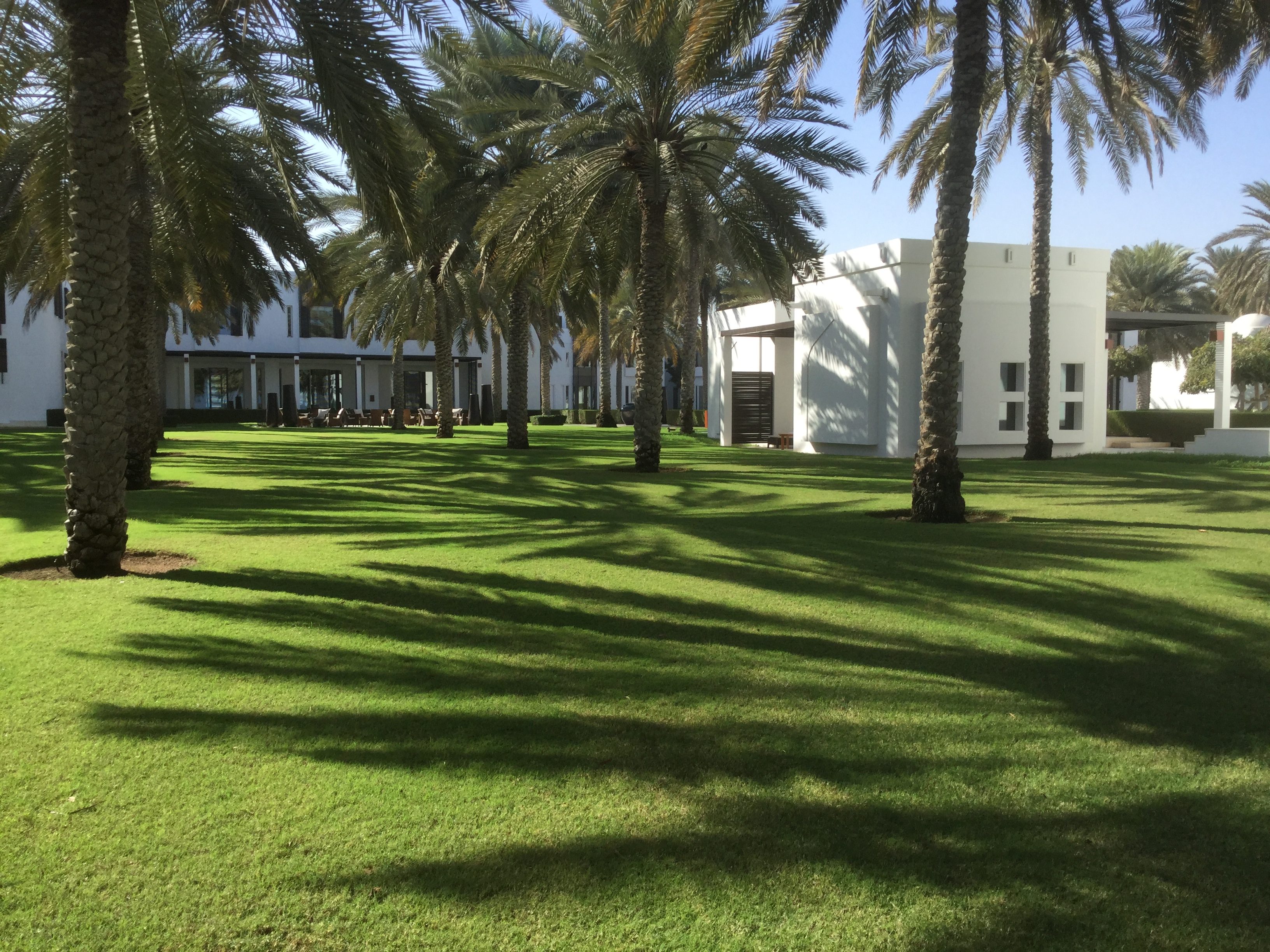
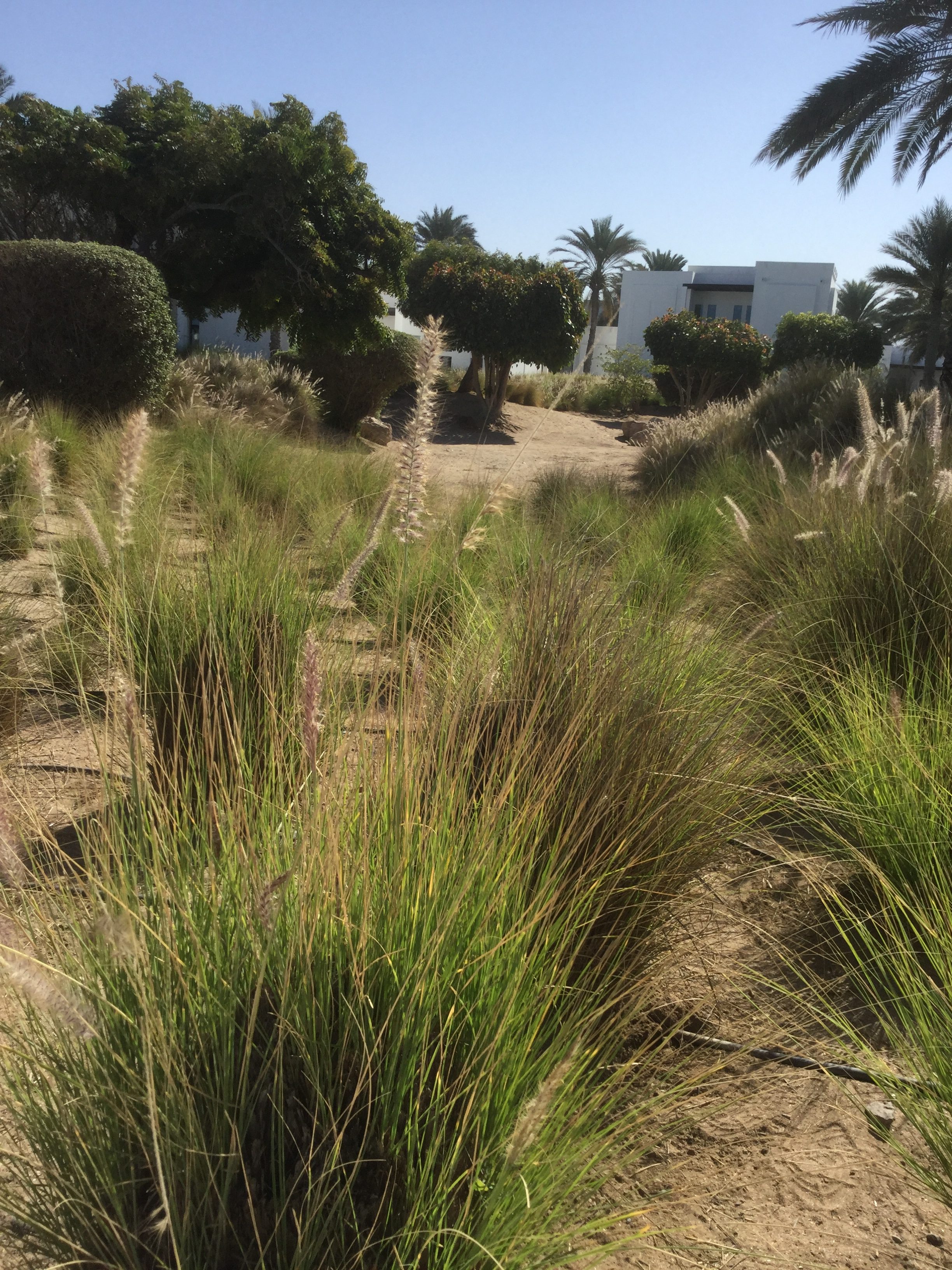
After we found the Club Lounge we headed outside to find the pools. This was a challenge to the newly arrived guest, as the pretty sandstone slab walkways through the grounds didn’t have signposts, or didn’t seem to lead you to anywhere, other than to the front paths of the many two storey white buildings to be found, which we later realised were the villas of the hotel. These villas were all separated by lush green lawns, sharply trimmed hedgerows, palms, and areas of tufted grasses in sandy soils, which attracted small birds to eat their seeds. It really was very lovely, though hard to navigate through!
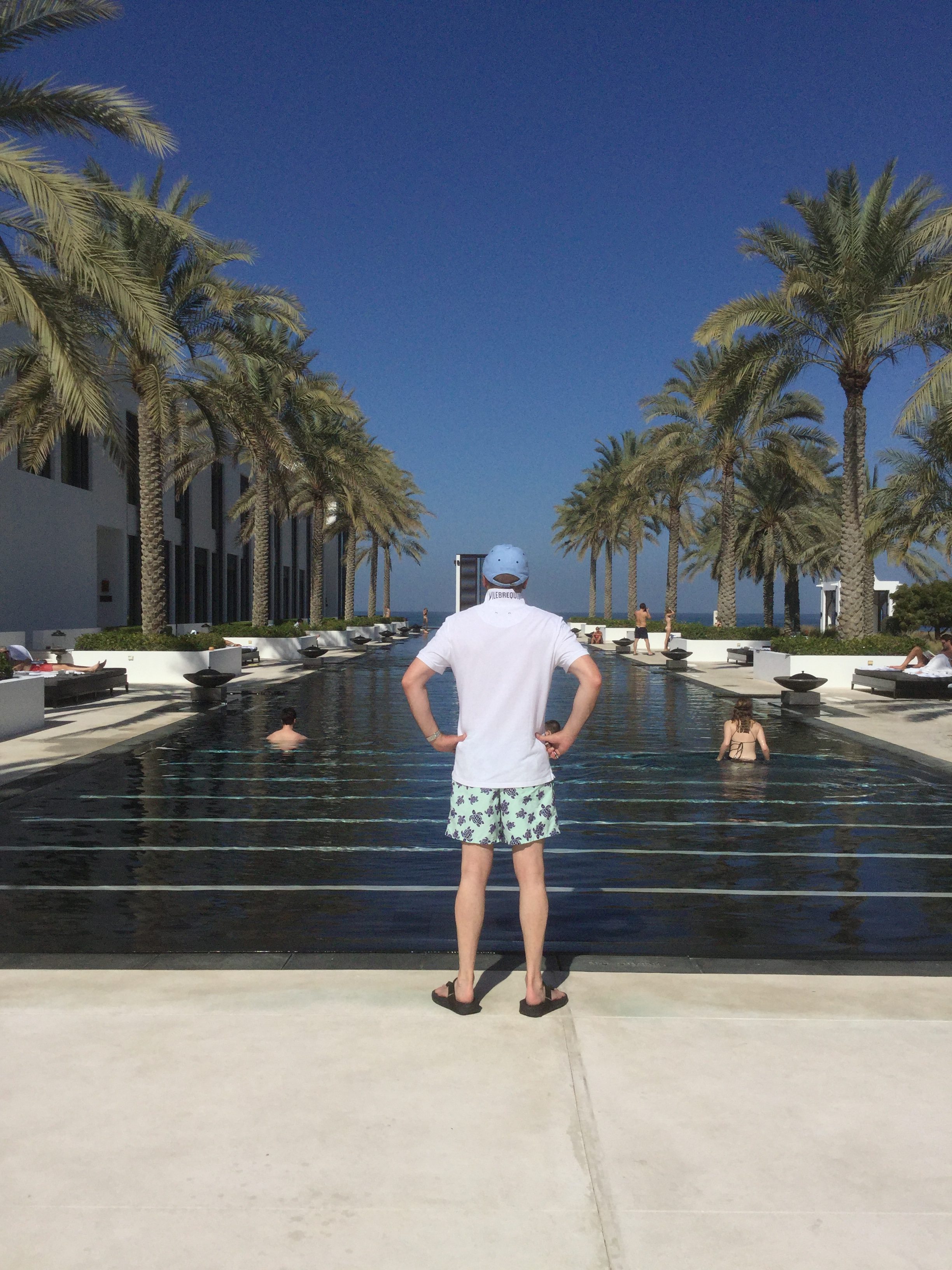
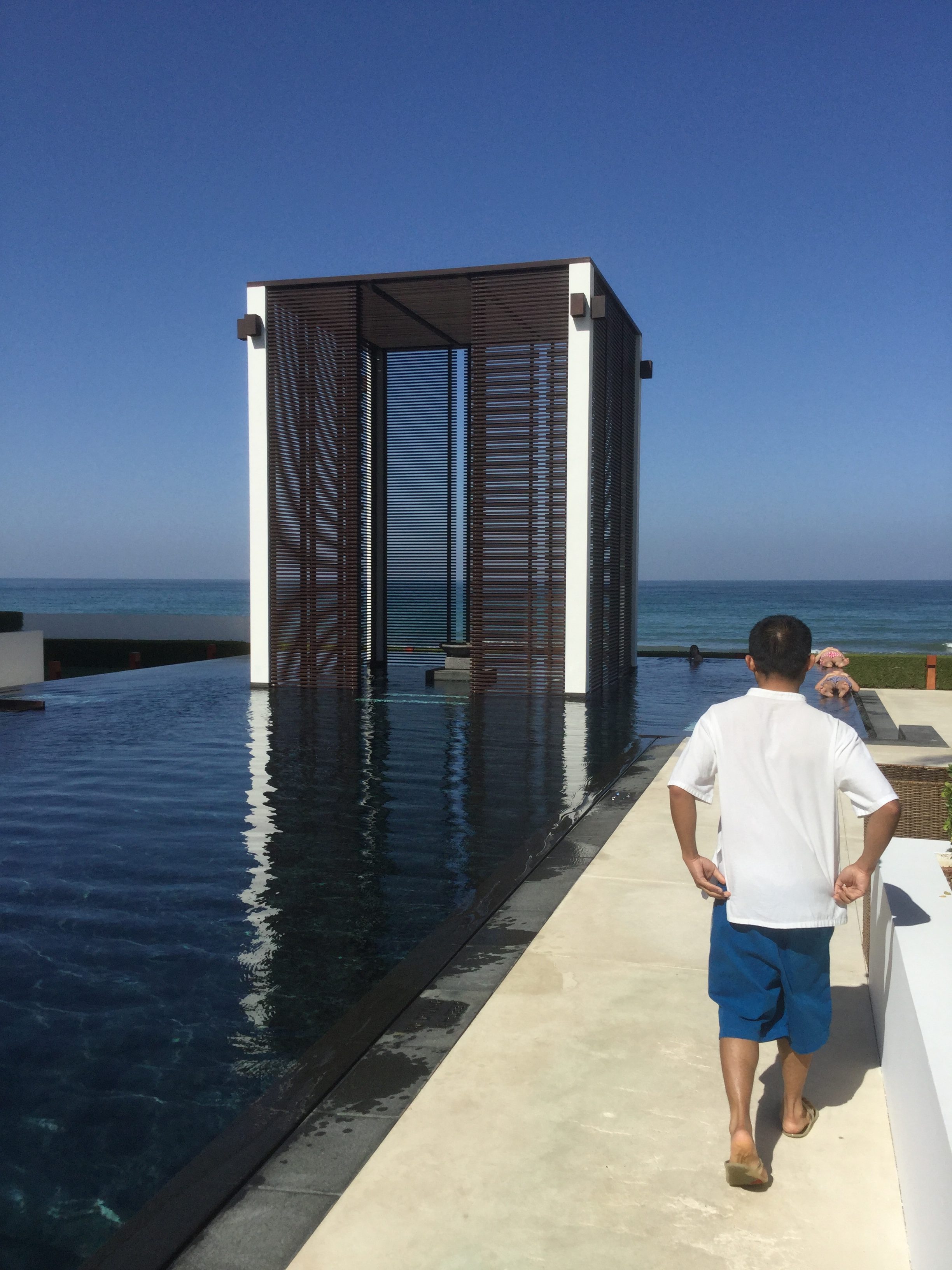
We first found the Long Pool. This is 103m long and circa 5m wide lap pool running perpendicular to the beach, surrounded by luxurious double sun beds. On one side is a large building which housed the spa and possibly some bedrooms. The building hid the sun from half of the sun loungers just after noon. Chilled tunes wafted unobtrusively from speakers set into the planted areas between the loungers and a man was on hand to roll out your towels when you arrived, and to keep you topped up with iced water with mint and lime though the day. He would also bring you drinks and light meals from the menus he distributed. We shared some nice tempura battered fish pieces and a glasses of sauvignon blanc, though this had to be drunk quickly to avoid it getting too warm in the sunshine. The long pool area was never crowded during our stay and looked stunning, with its black tiles drawing you towards an architectural folly cum additional lounging area, down by the beach.
The beach is the biggest (and maybe only) negative at the Chedi. It’s quite stoney, looks a little tatty, and has dark rather than beige or white sand. One assumes this is why the Chedi has three beautiful pool areas for you to lounge around. One day when I went for a dip in the sea I found myself being drawn away from shore by a mild rip; so be alert.
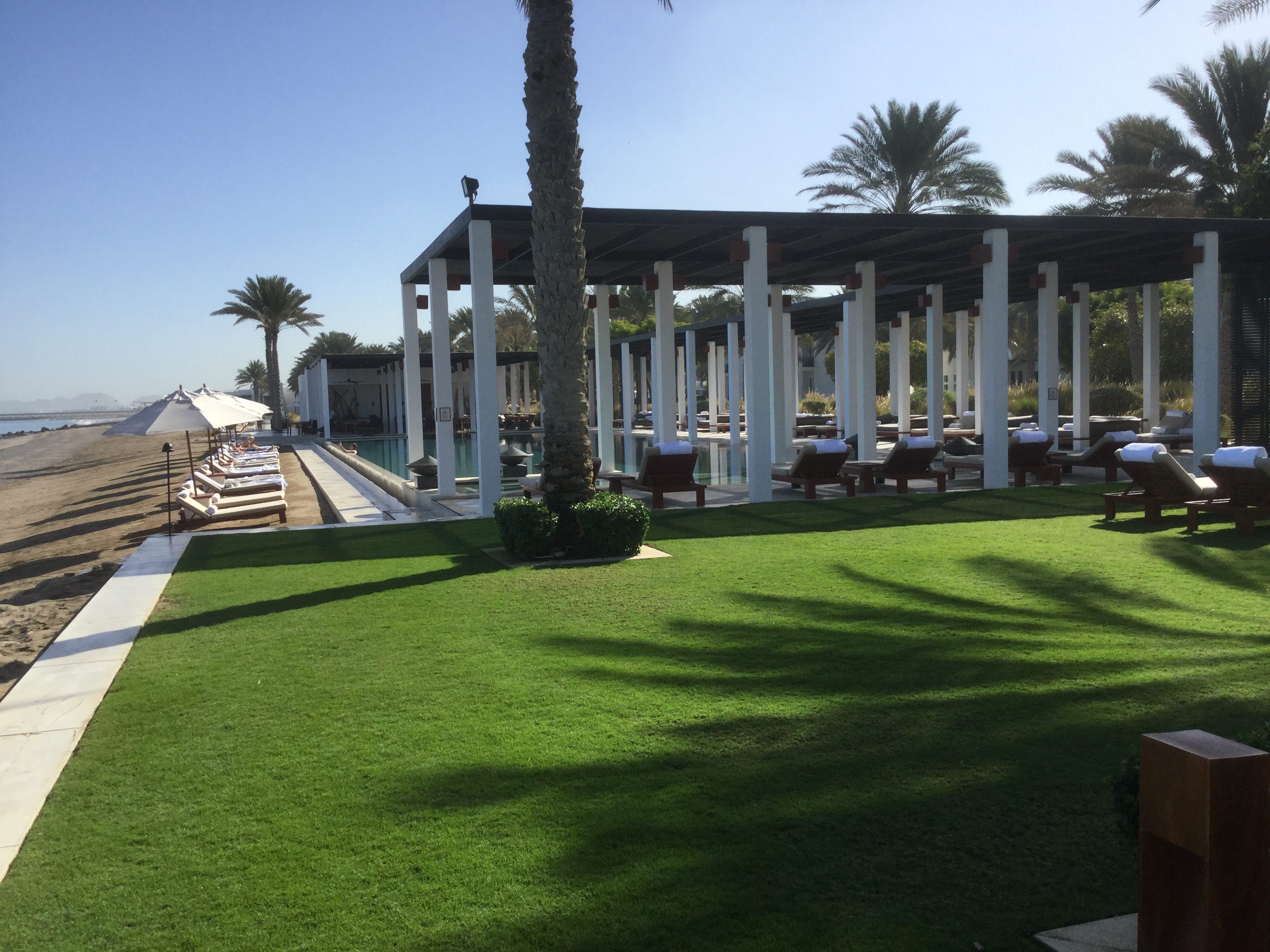
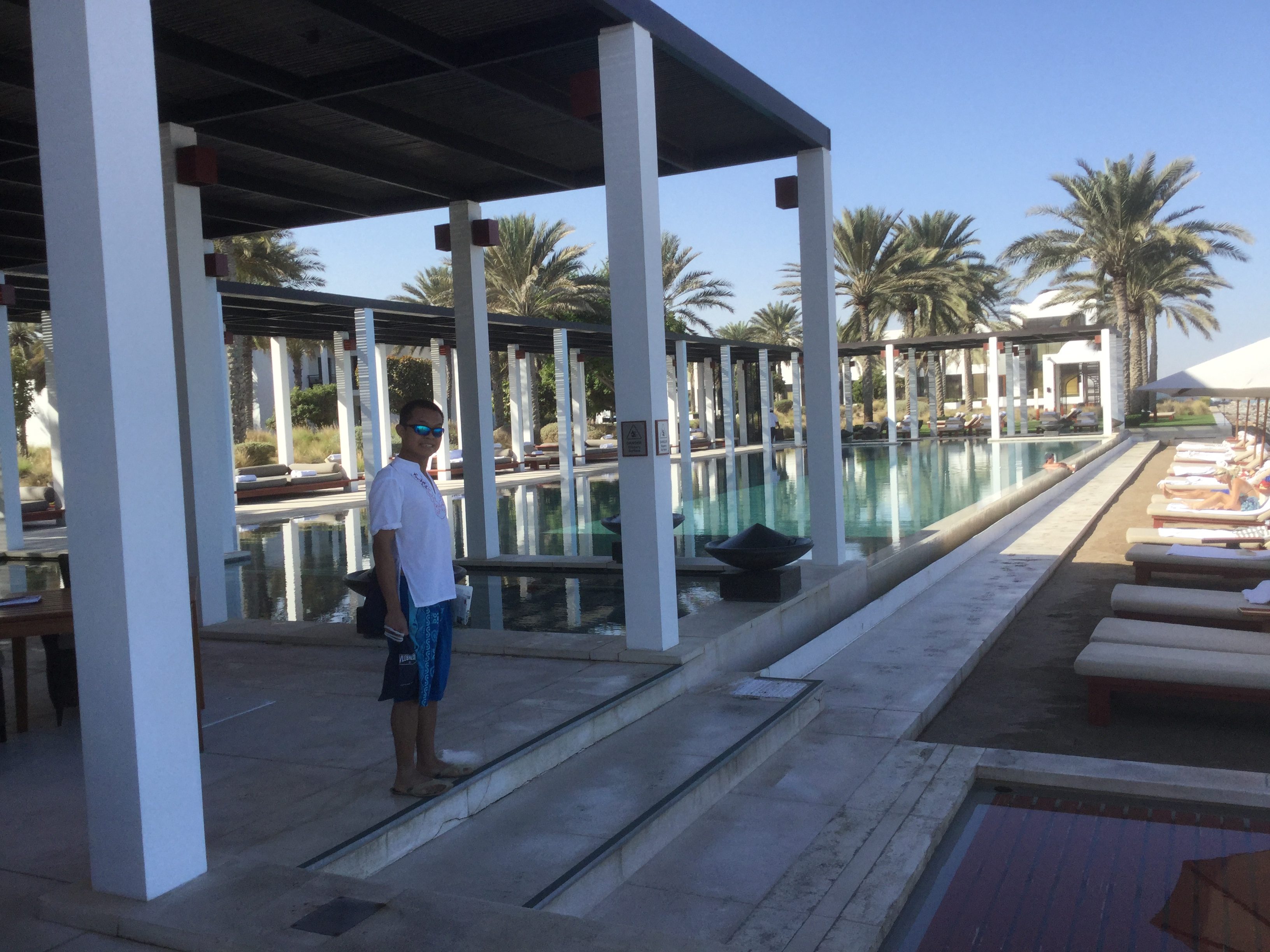
The second pool we discovered, the Chedi Pool, became our favourite to sunbathe next to throughout the week. Sitting parallel to the beach, it just looked so beautiful and tranquil, and it didn’t have the sun blocked out by buildings, but in the afternoon there was dappled shade from palm trees. It has a beach restaurant at one end, though staff will serve you food and drinks at your lounger. Beyond that are some clean toilets, then there’s a 250m walk to their main (evening) beachside restaurant, which sits near the third pool, the Serai Pool, which is for families, and which we didn’t use, which sits adjoining the hotel’s Serai wing. In the post Tunisia era I should note that there were unarmed security personnel keeping their eyes on the beach all day.
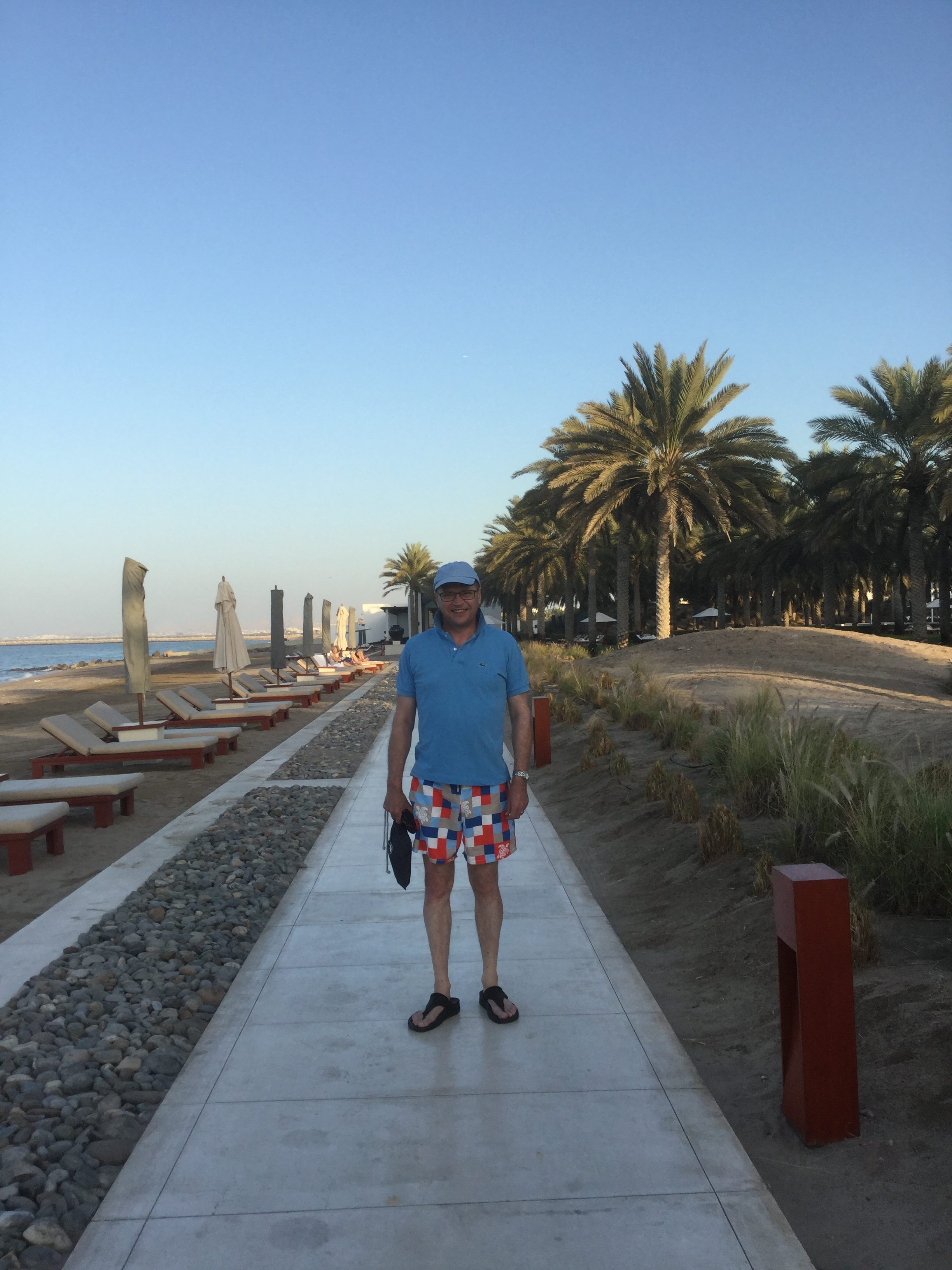
So the grounds cover quite an area, and everything is well irrigated and lush. The low level bright white villas and buildings are very attractively set into this greenery, with the blue skies above them, in which parakeets and other birds fly about. At 5am on alternate days they ‘fog’ the grounds to ward off mosquitoes, which woke and angered me one morning (I thought a helicopter was landing outside my room!), but I have to report that we did not see mosquitos anywhere during our stay.
We visited the Concierge desk on the second morning, to get advice on organising some trips and excursions. Mohamed and Richard gave us particularly good support during our entire stay, which was refreshing because I had had little to no support from the concierge department when asking questions or trying to arrange things before my stay. Mohamed booked us a half day city tour for that morning, even though we were a few hours later than they normally operate. We also booked for a half day dolphin watching and snorkelling trip for a few days later. These excursions were not too badly priced, at 60 and 65 OMR (c£125 at the time) for two people, but the full day trips organised through the hotel were very expensive (c £350 for 2 people) and not not appear to be good value in a country where petrol is 30p/litre and wages are kept low by the use of south and southeast Asians migrant labour. We actually booked a nice taxi driver who took us to a restaurant one night, to take us on a half day trip to the inland town of Nizwa, for 60 Rials. That was about 10% of the hotel’s price, and although we might not have had as nice a car, or a well-trained guide fluent in English, we did feel we had got good value for money, and we had a good day out. Nizwa is a cool place to visit, especially on a Friday, when they have a cattle market just outside the old city walls. Inside the walls is a large traditional marketplace, a few shops selling tourist must-haves, and a nice old fort. The journey from Muscat to Nizwa takes about 1.5 hours, along new highways cutting through and alongside the Hajar mountains. The arid scenery was great and the geology was particularly interesting.
The morning Muscat tour was very interesting, with a smart university student driving us around in a clean, shiny white toyota. Our first stop was the grand Sultan Qaboos mosque and we got in just before it closed to visitors. As an aside, h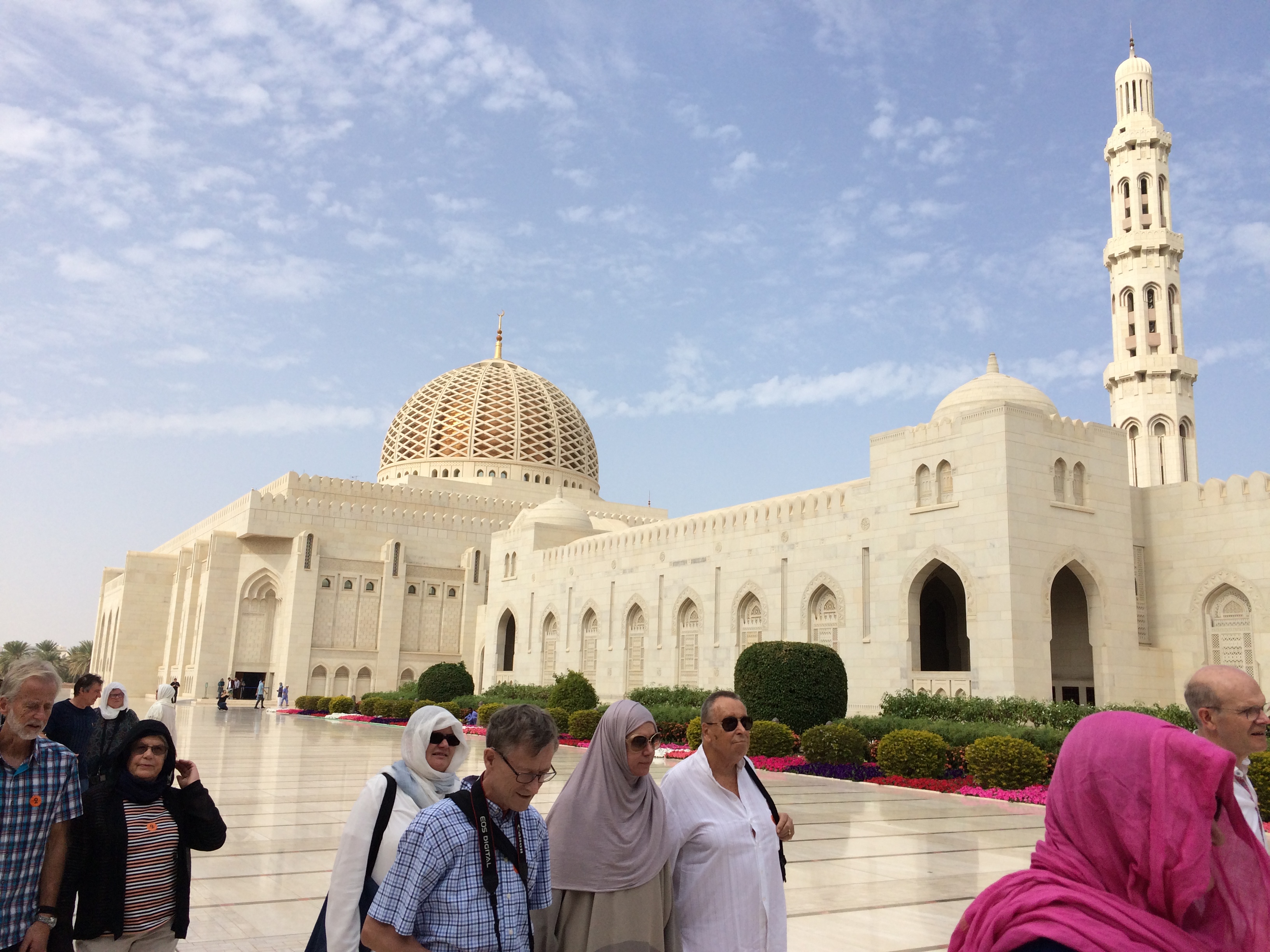 ere’s a tale of when cultural appropriation goes wrong: My darling Mr A brought me back a piece of arabic clothing, called an abaya, from his pilgrimage to Mecca. I’ve worn it a few times in islamic countries overseas (Egypt, Malaysia) and always received positive comments from the locals, so I put it on with pride that morning. But at the grand mosque our guide had to get special permission for me to be allowed inside because the garment I was wearing was “the sort you would wear lounging around at home” and didn’t show sufficient respect to the mosque. I also later learned that an abaya is a female garment! So watch out – even with the best of intentions, one needs to wise up before appropriating cultural dress! I’ll probably leave the jack boots at home when I next go to Germany!
On the Muscat tour, down at the corniche where the Sultan’s two private super-yachts are berthed we
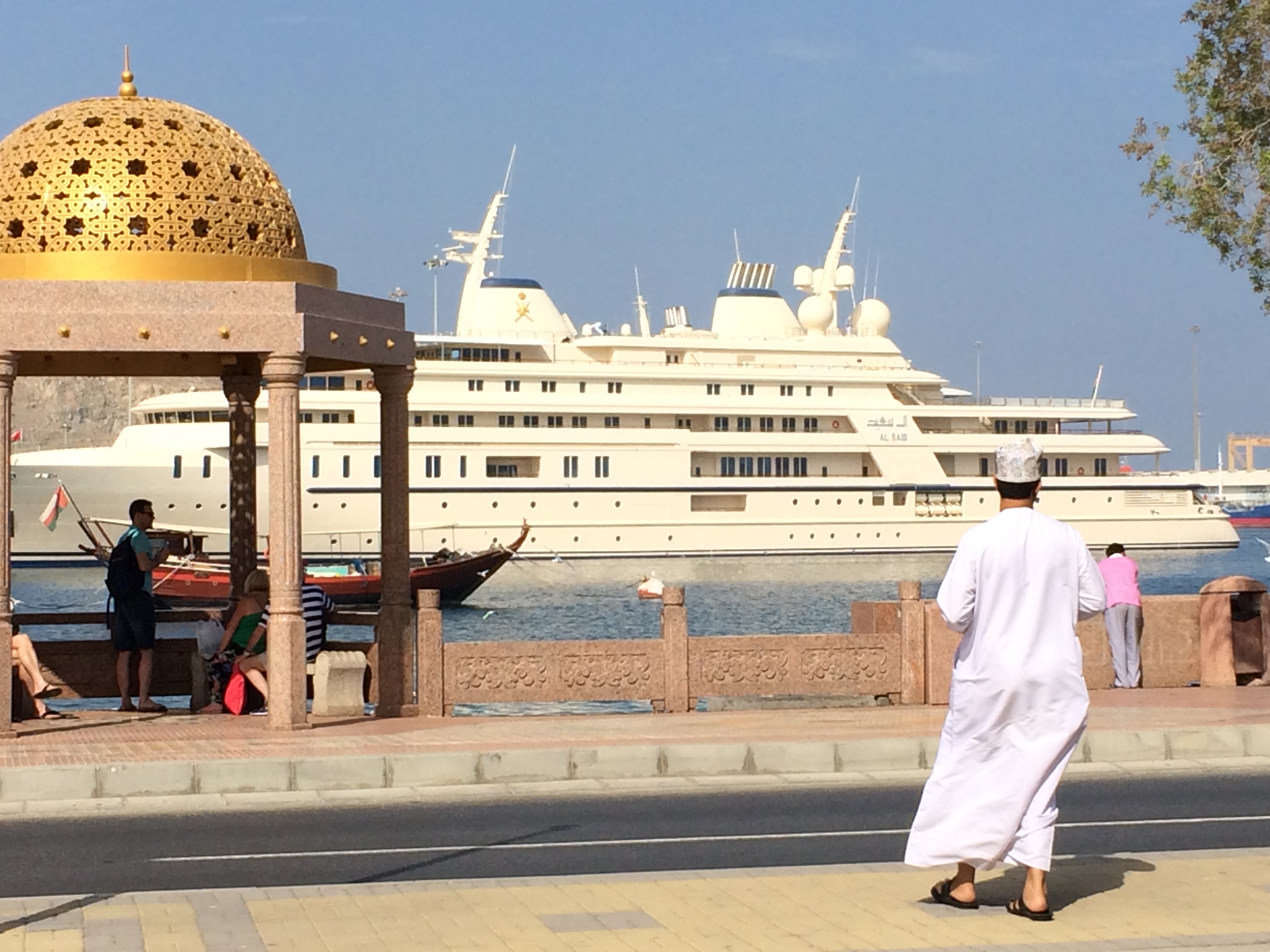
had a good visit to the old souk. The traders hardly hassled us at all, which was good and unexpected, and with a little help from our guide, we bought some Frankincense to take home as a late Christmas present. Frankincense is burned all over the Sultanate, to produce a clean exotic aroma, including in the Chedi’s main foyer. Our guide pointed out a restaurant he recommended for dinnertime, Bait al Luban, which was also commended by the Chedi’s concierge team, as being traditionally Omani. So we went there a few nights later. But I found it very disappointing; the food was very basic and not to my liking, and all of the staff, including those in the kitchen were Indian. They were lovely people, but I felt cheated that I was not experiencing a truly Omani meal. As the restaurant didn’t serve alcohol (a very common situation outside hotels) we chose from a good selection of juices, and I came across a deliciously sharp and refreshing drink we later came across in other places too: lemon juice with mint. I heartily commend it to you! (OMR 31 for two people)
A few nights later we ate at Kargeen, closer to the Chedi, but still a taxi ride away, which was much more Omani, and much better. We sat outside in a courtyard area lush with vegetation, candle-lit and with the light smoke of kebabs grilling over charcoal drifting in the breeze, and men smoking flavoured shishas. The portions were enormous and everything we had tasted good. (meal for two OMR36)
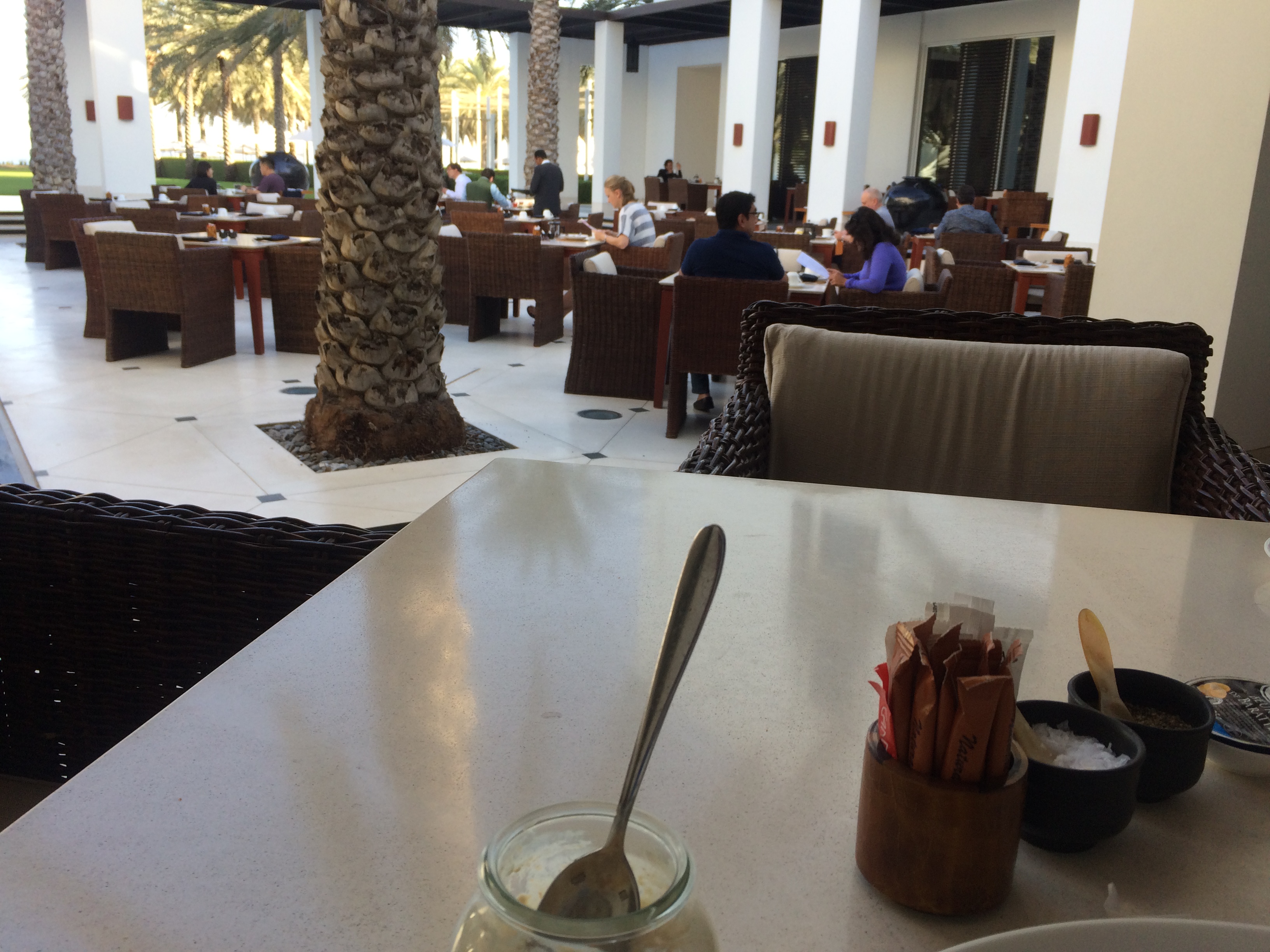
Eating outside was definitely cheaper than in the Chedi, but when taxi fares were added in, there wasn’t much in it. The main restaurant in the Chedi had a very enticing menu, and we had dinner there on our last three nights. Service was superb, especially from Subin, there was an excellent wine list (it amazes me that people could spend over £2000 on a bottle of wine in a tropical setting), but the food was a bit hit and miss. I had a good curry one night, Mr A’s Nasi Goreng was “so-so”, a foie gras dish I had been very excited about was a bit disappointing due to the improper mixture of flavours and textures, which I don’t believe a western chef would have attempted. Our final dinner there was on Christmas Day, in the evening, when I pushed the boat out on the wines with a bottle of Sarget 2001, the second label of chateau Gruaud Larose, at c£120. It was nice, but, surprisingly still a little ‘green’ for a 15 year old wine. But our main courses of venison (me) and lamb (Mr A’s) were not good enough for our celebratory dinner. I did give feedback to the waiting staff, that the meats were overcooked and a bit fatty, but nothing happened. A chocolate fondant and caramel ice cream dessert was pretty good, and we finished off with a glass of Frangelika and milk (a favourite postprandial tipple of ours, but unheard of by the waiters in Oman). It was a c£250 meal for two (OMR124), but, as I say, a little disappointing. We didn’t eat at the hotel’s Beach Restaurant during our stay (its menu offered a multi-course tasting menu), but we walked past it at night and it was full with a very buzzy atmosphere, versus the rather subdued, but relaxed and comfortable vibe of the main restaurant.
We checked out after breakfast on Boxing Day, 26th December and there were a few items to query on my bill: They had put a 1 Rial/day levy on it without explanation, which I was told was “for the poor children of Oman”, but this was removed, as I felt I had already contributed sufficiently to the Omani economy. But they had also charged me for some Club room benefits which should have been complimentary, which they also removed. The total then came to OMR2750 (c£5500) for a 6 night stay.
I did enjoy staying at the Chedi, but it did not quite meet my expectations. It certainly didn’t match the Datai in Langkawi (the most recent LHW hotel we stayed in) in terms of value for money, service, or food quality. One got nothing extra in return for the doubling of prices at Christmas (many other hotels require you to have an expensive Christmas dinner, while keeping the room rates down, which I probably would have found better value. The hotel staff were not paid extra to work at Christmas, not given time off, (even though several of the Indians and Philippinos were Christian), so the doubling of prices just suggests greed, in my humble opinion. Our total bill for 6 nights, some food, one pedicure in the spa, two half day trips and a small cash advance was OMR 2748. With forex costs and a poor exchange rate, that added up to £5984. When added to the air fare, it was indeed a very expensive short break!
Would I go back? Possibly, if merely to grab some guaranteed winter sunshine within 8 hours flying from London. But I would avoid the Christmas price hike.
On a closing note I want to tell you that 2 days before we left England I got an email from the Chedi pointing out that they have noted we are two men, but the room we had booked only had one kingsize bed in it, that they didn’t have any twin rooms, and it wouldn’t be possible to set up a spare bed on our room, but they could, “arrange Hollywood twin setup which is 2 separate sheets in 1 bed base only for rooms that are equipped with king size bed only. Please let us know if you would like to proceed”.
I didn’t know how to take this – were they suggesting that it was unacceptable for two men to share a bed? Or were they just trying to pre-empt an embarrassment at check in? As a hotelier, I know that on occasion people arrive for a double room booking and suddenly declare that they want a twin room because they don’t want to share a bed.
So I’m prepared to give the Chedi the benefit of the doubt on the matter. I replied to their email saying I was happy with the arrangements I had booked, and they didn’t need to arrange anything different for us. On site, nothing was mentioned at all about the fact that were were both male. But of course we didn’t flaunt our lifestyle choices!
This Post Has 0 Comments