
The Iguazu Falls (sometimes spelt Iguassu or Iguacu) is the largest complex of waterfalls in the world, and one of the world’s greatest natural wonders. The falls form part of the border between Brazil and Argentina and can be viewed from either side, but 80% of the falls are on the Argentine side, which actually means you can see more of them from the Brazilian side. That’s the side we chose when on a trip to Brazil in April 2022, staying at the Belmond Hotel das Cataratas. We flew into Foz do Iguacu (“IGU”) which has flights from several Brazilian cities. On the Argentine side Puerto Iguazu (“IGR”) handles domestic flights, mostly just from Buenos Aires.

The Iguacu river rises near Curitiba, but the water at the falls comes from the Itaipu dam, the world’s second largest hydro-electric generator. We were told that the falls have most water on Tuesdays when extra sluices are opened at the dam. On its approach to the falls the Iguazu river is wide, relatively shallow, slow-moving and meandering. After the falls the river is much deeper, narrower and faster moving.
There are three main ways to see the falls: by helicopter, on foot and by boat. We didn’t do the latter, because we didn’t want to get soaked, and because we saw that the inflatable boats only go close to minor falls.

1. BY HELICOPTER
200m Before the park entrance, opposite the bird park, is a heliport from where a company called Helisul offers ten minute flights over the falls. One can’t book in advance, it’s just turn up and join the queue, and tickets are BRL450 each (c£73). It’s a good idea to get your hotel to phone Helisul to check they are flying and what the queue looks like. Fortunately when we got there we only had to wait 15 minutes to get our flight. The Bell 505 chopper we went on, registered PP-JRH, takes 3 pax, one of whom gets to sit at the front next to the pilot. You can pay extra to have the flight personal to you and your partner.

After a smooth take-off we headed over the forest towards the falls, which first reveal themselves by the large plume of water vapour rising above them. The pilot makes a few circuits above the falls and the Iguazu river feeding them.
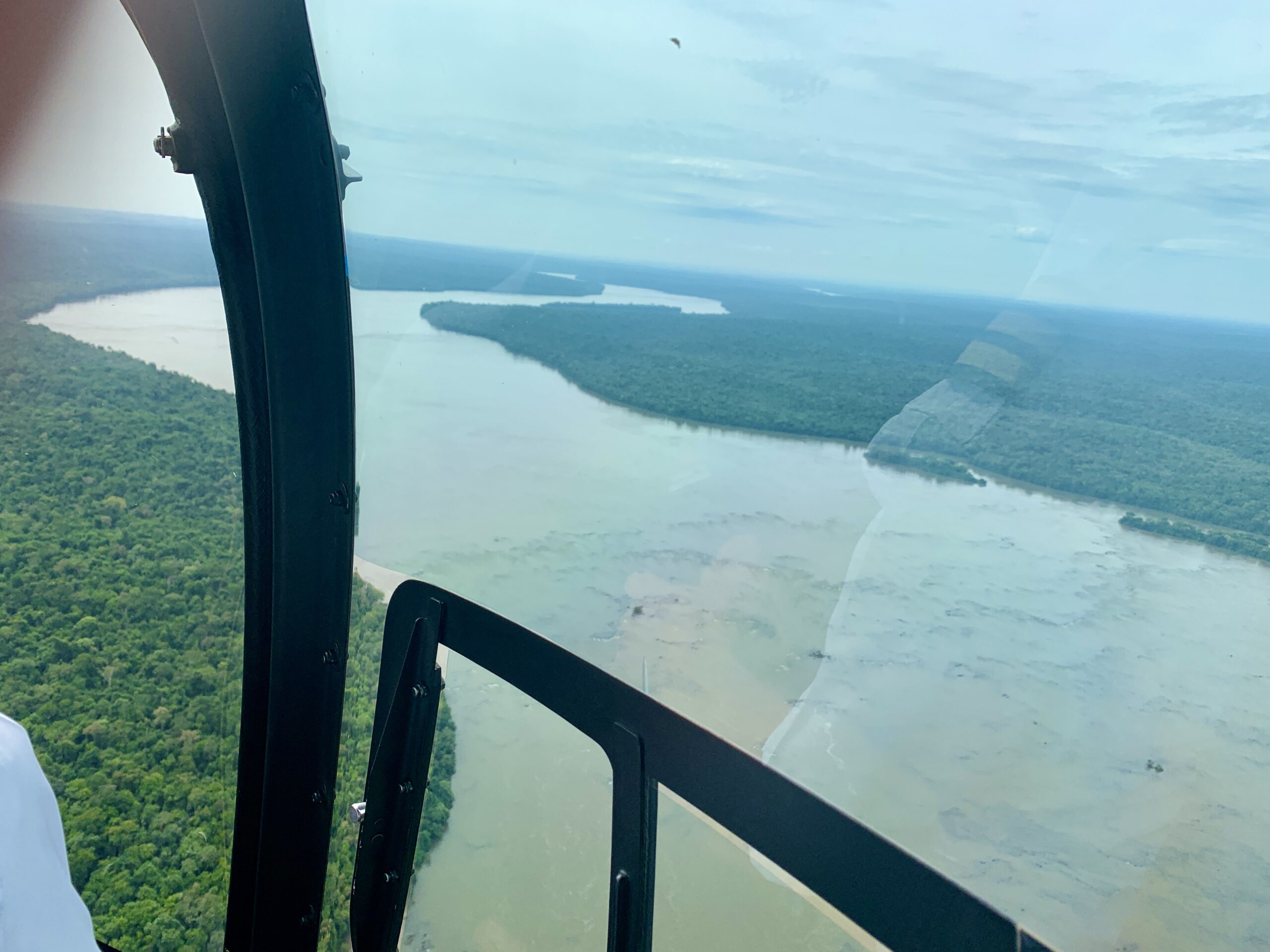

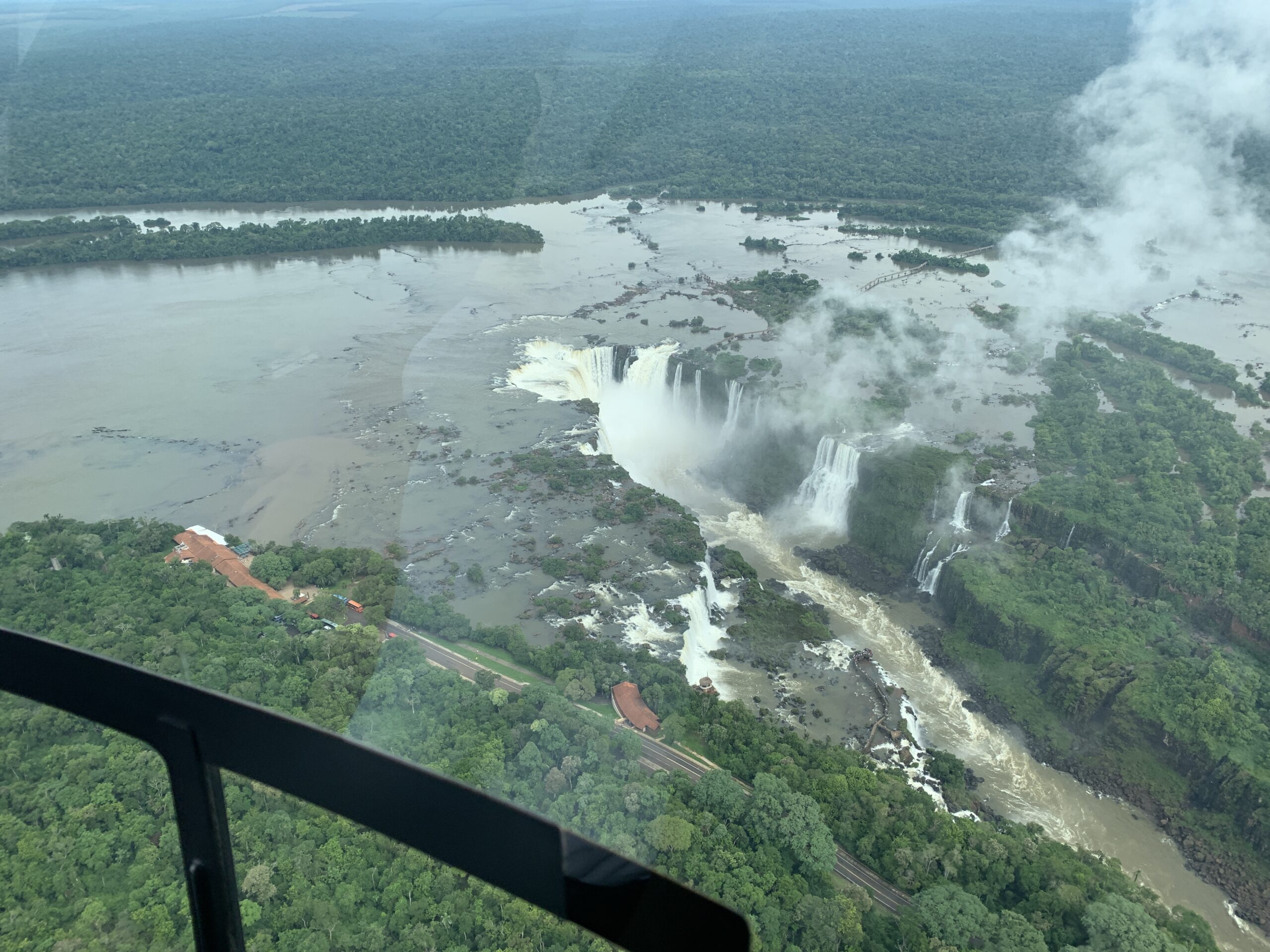

Ten minutes goes by very quickly, but there is so much to see that this experience will stay with you for a long time, so for that reason I would say the £73 is well worth it. 10/10 If you prefer, Helisul also offers 30-minute flights which also explore inland to the Brazilian city of Foz do Iguacu and also to the point where Brazil, Argentina and Paraguay meet. Helicopter flights are not available from the Argentinian side of the park and the Helisul flights do not fly over Argentina.
2. On foot
On both sides of the falls there are walking trails to take you to the best vantage points, but considerably more walking is involved on the Argentina side. Focussing on the Brazilian side, most tourists come into the National Park by tour bus, which drops them opposite the Belmond Hotel das Cataratas. That’s where the walking trails start from. So it really is a perk to be staying at the hotel because guests get access to the trails before the general public arrives, and after they leave. Iguazu is a major South American tourist destination and the trails and vantage points can become very crowded, so it really is a bonus if you have semi-private access, on a morning walk organised by the hotel. We had our walk on a Monday when the Brazilian park is closed to visitors completely, other than Belmond guests, which was very special. It was just me, Mr A and our fluent English-speaking guide. There was a lot of walking downhill and down steps, but less so going back up, because at the end of the trail there’s a lift to take everyone back up to street level, where the public would rejoin their tour buses.
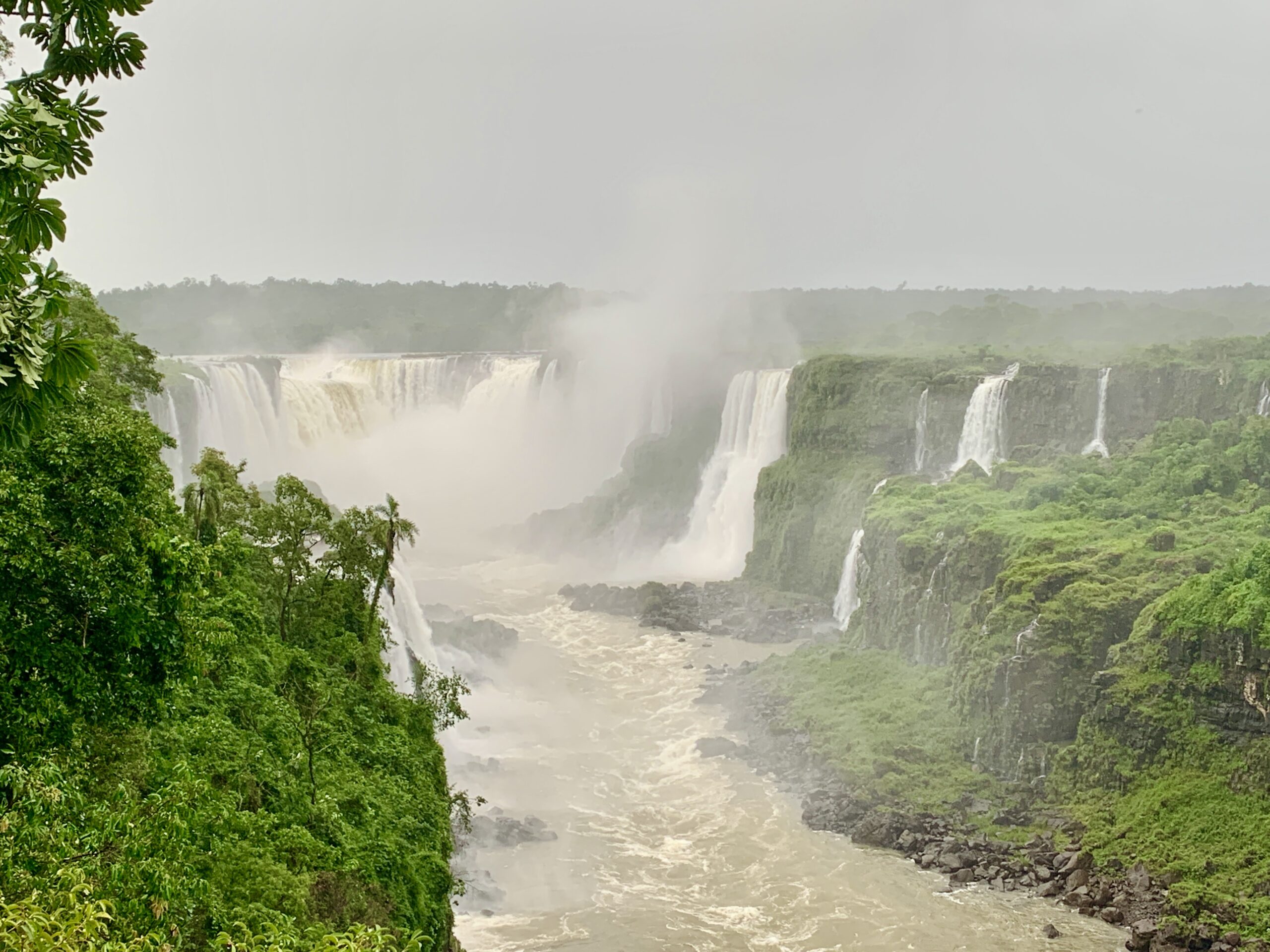



It is truly incredible seeing the power and majesty of the Iguazu Falls up close. Doing so without anyone else around is priceless. 10/10
This Post Has 0 Comments